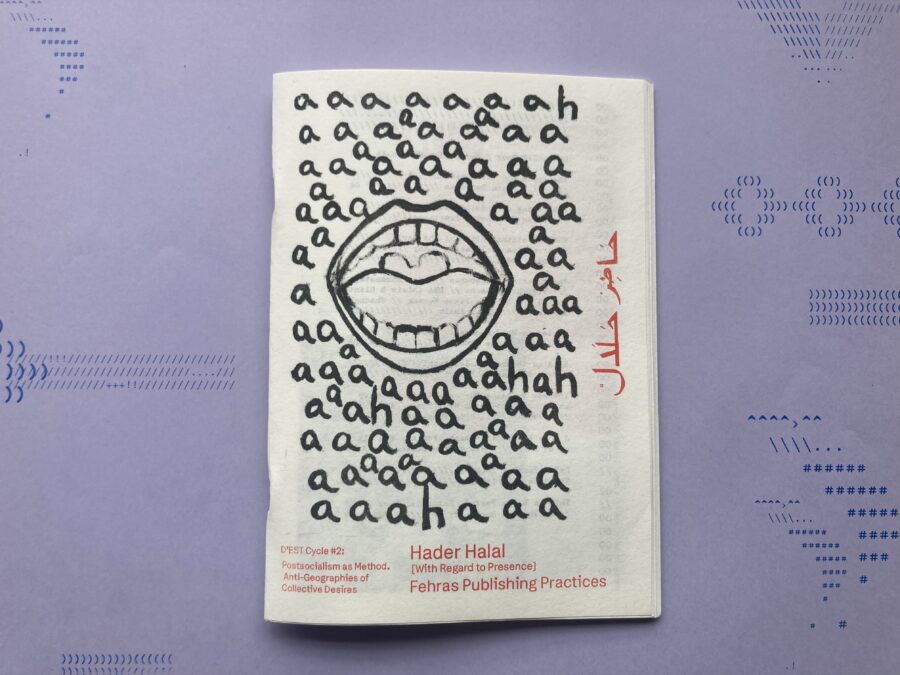
Edited by Fehras Publishing Practices. Contributions by Aaron Ahalu, Anna Ehrenstein, DNA (Blair & Clint Opara), Farkhondeh Shahroudi, Fehras Publishing Practices, Iskandar Abdalla, Jyl Franzbecker, Moonis Ahmad, Promona Sengupta, Rebecca Pokua Korang, Shaunak Mahbubani, Shrujana N. Shridhar, and Vidisha-Fadescha
40 pages
Download
Digital copy
Print yourself copy
Risoprint yourself copy
Risopint copy 13 EUR, order here
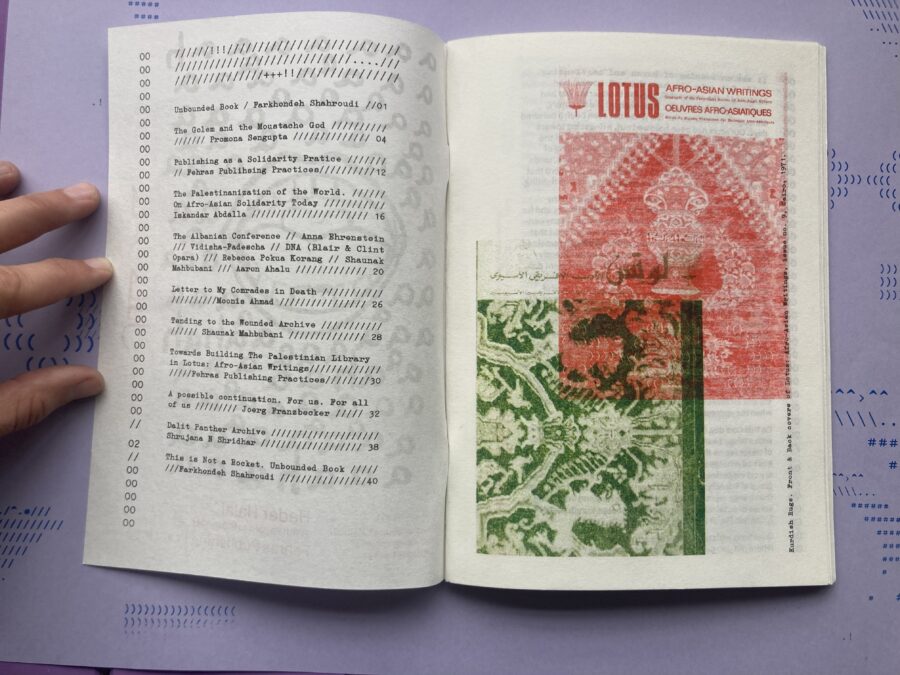
The zine حاضر حلال Hader Halal [Presence is Halal] assembles texts around the literary journal Lotus: Afro-Asian Writings. First published in 1968, it was a trilingual (Arabic, English, and French) journal published by the Afro-Asian Writers Association from 1968 to the late 1990s, aiming to promote Afro-Asian solidarity and anti-colonial politics through literature and culture. It published poetry, short stories, plays, cultural studies, book reviews, illustrations, as well as resolutions and documents of the Afro-Asian Writers Association conferences. For D’EST cycle #2, Fehras Publishing Practices initiated collective fabulations in response to their Lotus collection to explore the necessity of “Publishing as a Solidarity Practice” and to mirror the interconnectedness of hopes, liberation struggles and resistance across different geographies and to reclaim forgotten publishing histories through the lens of migrant cultural workers and their allies (pp. 12-15).
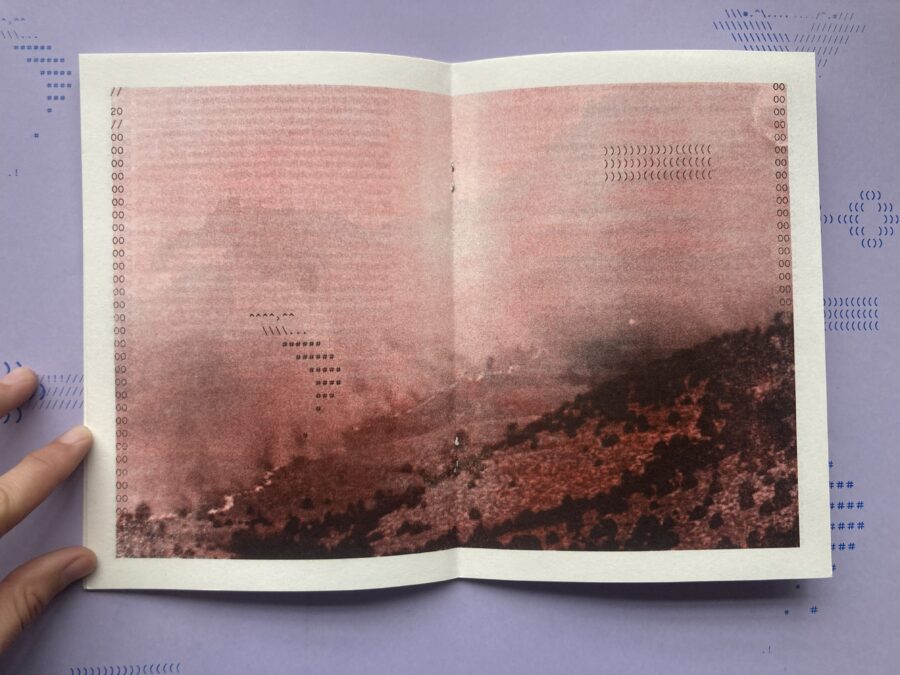
In Promona Sengupta’s words Lotus was “a lightning rod for radical intellectuals” as they formulate in their article “The Golem and the Moustache God” (pp. 04-11). The author Iskandar Abdalla discusses Palestine as a set of questions with rhizomatic histories at the gateway between Asia and Africa (pp. 16-19) and on the model of the Afro-Asian Writers’ conferences, the collective of Anna Ehrenstein, Vidisha-Fadescha, DNA (Blair & Clint Opara), Rebecca Pokua Korang, Shaunak Mahbubani, and Aaron Ahalu proposes its own conference: “The Albanian Conference.” Relating to the killing of the African-American teenager Michael Brown, Russian TV propaganda, discrimination against LGBT people in Albania and Ghana, British imperialism, upper-caste feminism in India and anti-Special Anti-Robbery Squad protests in Nigeria, they put a spotlight on “many flickering flames” over the world (pp. 22-25). While in “Letter to My Comrades in Death” Moonis Ahmad writes about the strange loud silence shortly before someone passes away (p. 26), Shaunak Mahbubani in “Tending to the Wounded Archive” cherishes cosmologies which avoid reductive representations (pp. 28-29). Jyl Franzbecker ponders about the ephemerality as well as power of relationships, communities, gestures and moments in “A possible continuation. For us. For all of us” (pp. 32-35). Shrujana N. Shridhar recapitulates the history of the “Dalit Panther Archive” and tries to make its documents accessible for Indian communities (pp. 37-38). The zine’s cover shows expressive prints of painted cloths by Farkhondeh Shahroudi.
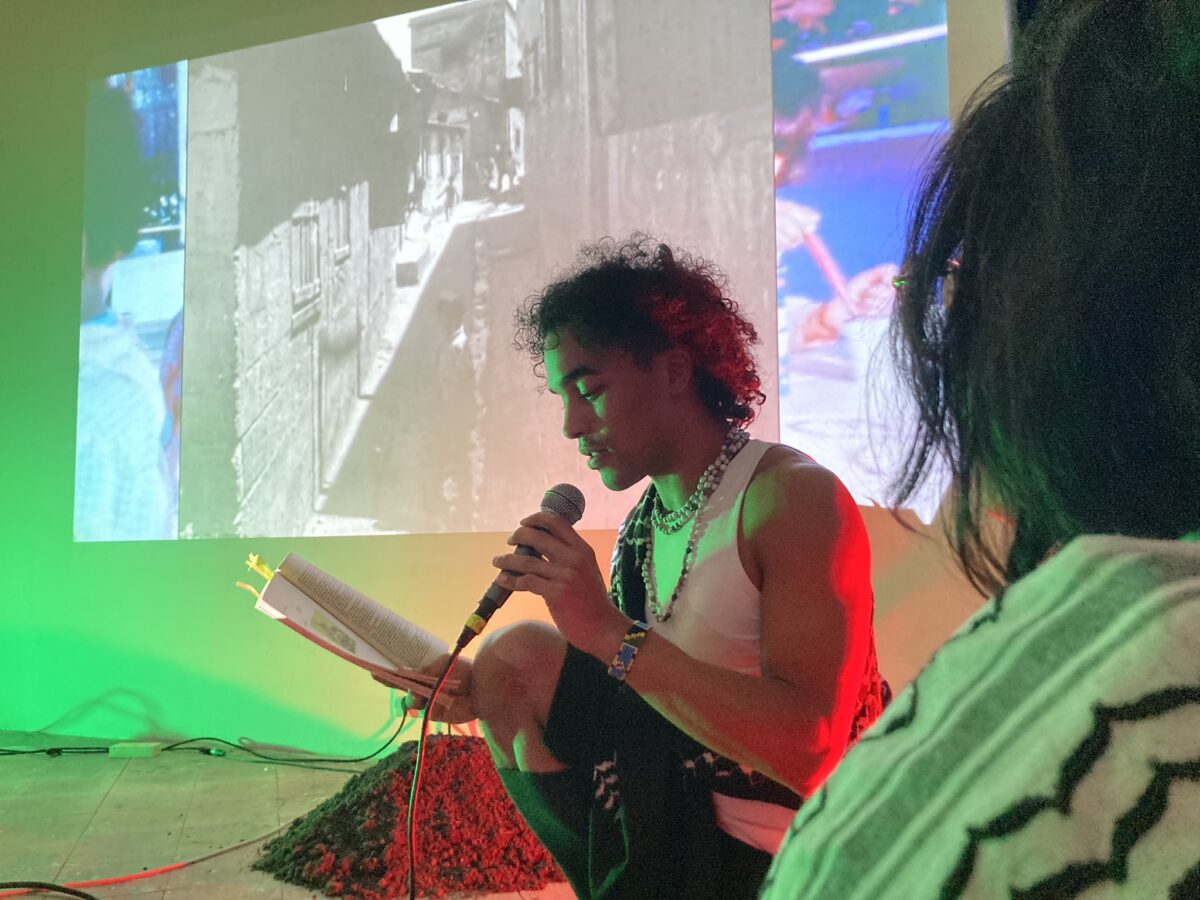
Image: Omar Gabriel Delnevo, Hader Halal zine launch, When The Jackal Leaves The Sun. district & Flutgraben, 2024. Photo: Suza Husse
D’EST cycle #2 Zines
As a result from the D’EST cycle #2 Postsocialism as a Method. Anti-Geographies of Collective Desires, the curatorial teams Fehras Publishing Practices, Nhà Sàn Collective, Krёlex zentre as well as the D’EST organizers have produces six zines that reflect on post-migrant, queer*feminist, post-socialist and anti–colonial intertwinings between geographies, metaphors and communalities. All zines have been designed by Aziza Ahmad and Suza Husse on the basis of Elsa Westreicher’s design for wild recuperations. material from below and thereby form a visual, textual and haptic documentation, manifestation and testament of this cycle and its surrounding post-socialist and anti-colonial battles and communal desires. Riso-printed by AK Knol, Printeretto Berlin, and Nino Bulling, Flutgraben 2023-25.