Postsocialism as Method. Anti-Geographies of Collective Desires. Ciné Moon Mobile
edited by Ulrike Gerhardt, Suza Husse. Contributions by Kim Bode, Aziza Kadiry, Gal Kirn, Karolina Majewska-Güde, Ulrike Gerhardt, Suza Husse
24 pages
Download
Digital copy
Print yourself copy
Risoprint yourself copy
Risoprint copy 8 EUR, order here
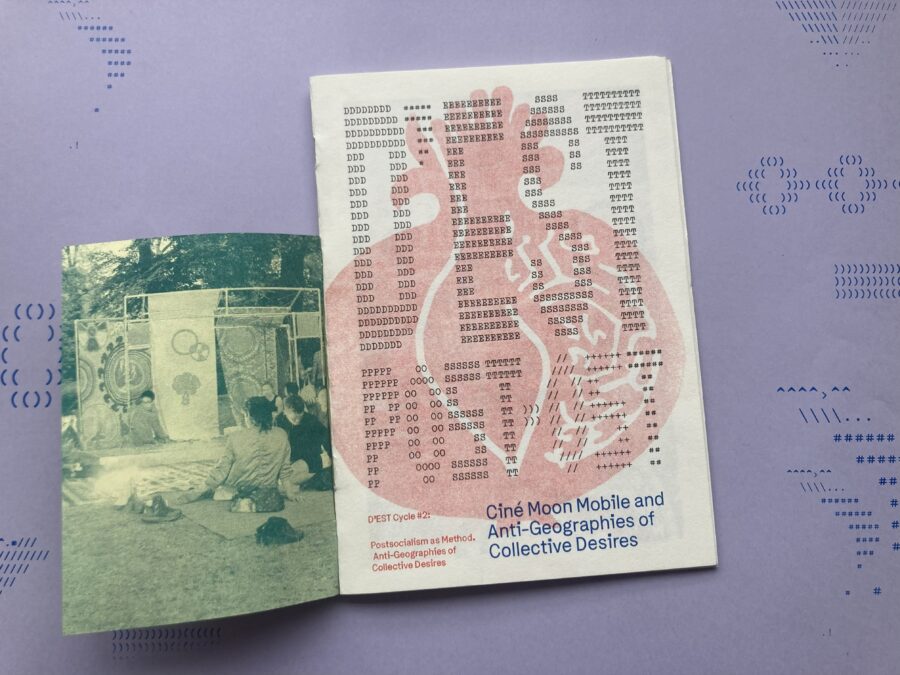
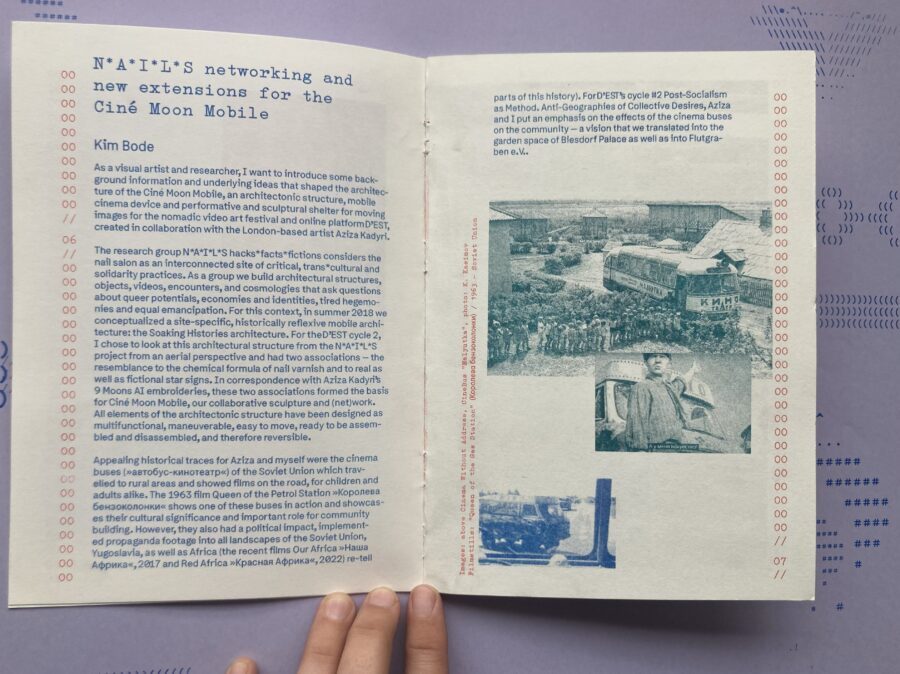
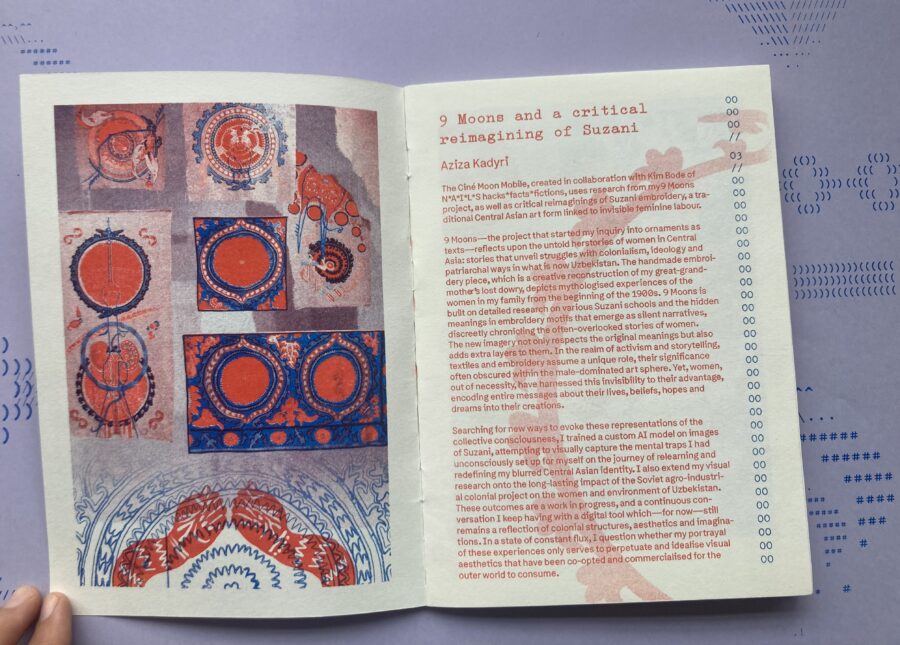
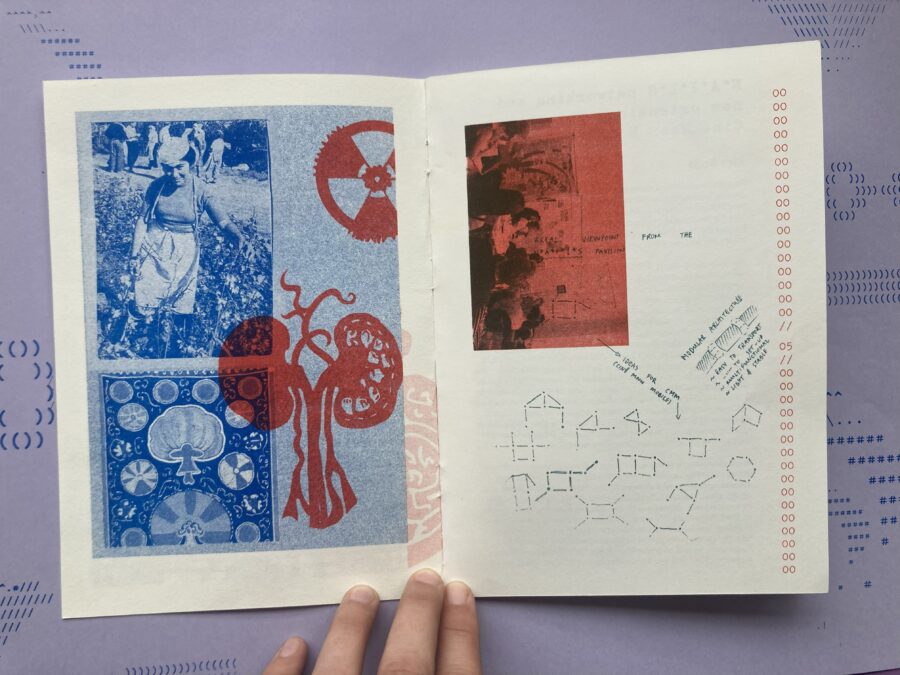
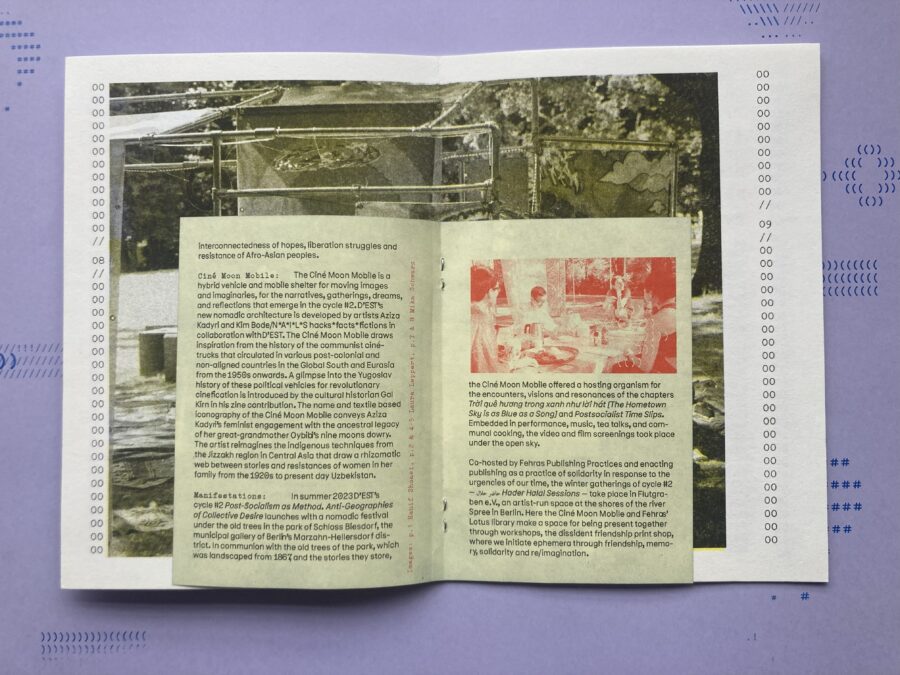
This introductory zine accompanies the nomadic manifestations of D’EST cycle #2 at Schloss Biesdorf and Flutgraben from summer to winter 2023 and gives insights into the nomadic performative architecture and hosting vehicle Ciné Moon Mobile, created by artists Aziza Kadiry and Kim Bode. The first article and visual insert is entitled “9 Moons and a Critical Reimagining of Suzani,” is by multidisciplinary artist Aziza Kadyri and deals with Suzani embroidery, a traditional Central Asian art form, and its connection to invisible female labor and the transfer of knowledge across generations. Aziza Kadyri writes about her feminist engagement with the ancestral legacy of her great-grandmother Oybibi’s nine moons dowry (pp. 03-05). The contribution “N*A*I*L*S networking and new extensions for the Ciné Moon Mobile” by artist Kim Bode introduces background information and undercurrents of the Ciné Moon Mobile, a hybrid vehicle and mobile shelter for imaginaries. Accompanied by historical images from the 1960s, Kim Bode talks about the significance of the Soviet cinema buses which traveled to rural areas of the Soviet Union, Ex-Yugoslavia and Africa (pp. 06-09).
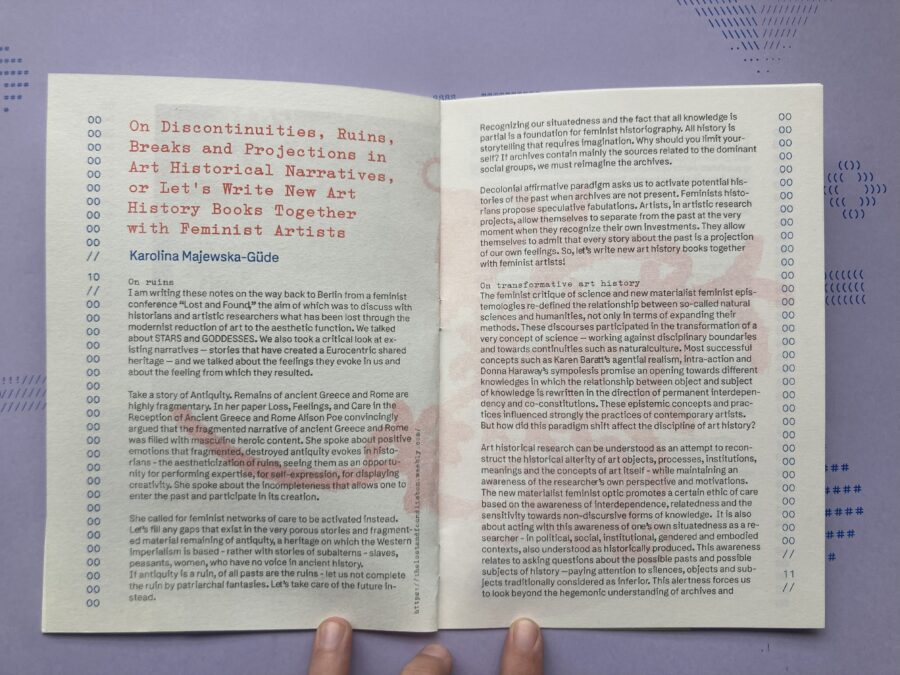
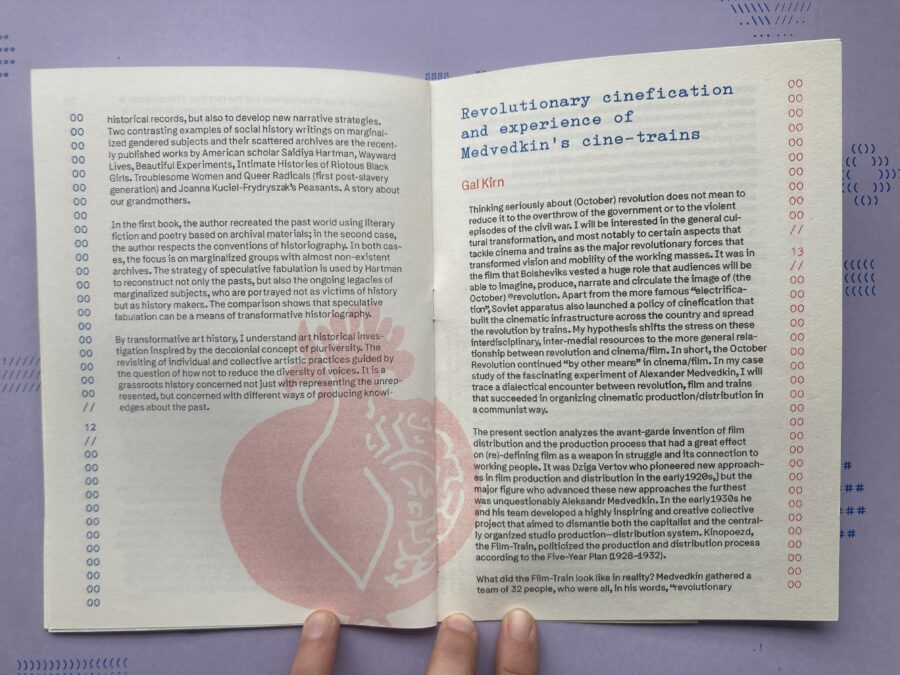
The art historian Karolina Majewska-Güde contributes an article entitled “On Discontinuities, Ruins, Breaks and Projections in Art Historical Narratives or Let’s Write New Art History Books Together with Feminist Artists,” discussing the epistemic concepts and practices of a transformative feminist art history. Her text focuses on feminist historiography, the decolonial paradigm and archival (re)imagination (pp. 10-12). The last textual contribution is from cultural historian Gal Kirn entitled “Revolutionary cinefication and experience of Medvekin’s cine-trains” and offers a glimpse into the history of these political vehicles for revolutionary cinefication. He tackles cinema and trains as major revolutionary forces that changed the vision of the working masses (pp. 13-15). The zine is enveloped by a smaller zine with texts by Suza Husse and Ulrike Gerhardt that introduces the thematic constellations and contexts, the nomadic movements and gatherings of D’EST cycle #2 Postsocialism as Method. Anti-Geographies of Collective Desires.